Wildfire
Wildfires are getting larger and more intense in the western United States and many regions of the world. These fires can have major impacts on society, including loss of lives, destruction of property, increased levels of smoke that affects our health, and damage to the economy.

National Interagency Fire Center
Actions
Discover different actions we are already taking to build our resilience to wildfire impacts.

US Forest Service
Training wildland firefighters: Wildland firefighters play a vital role in containing wildfires on natural landscapes, while reducing wildfire risk through prescribed burns and removal of potential fuel (for example, brush, dead leaves, fallen branches). As new technologies and science emerge, training programs can equip wildland firefighters with the latest knowledge and skills needed to better protect communities.

Tuolumne Fire Safe Council
Developing a wildfire protection plan: Community Wildfire Protection Plans (CWPP) provide local guidance on how to reduce wildfire risk and increase resilience in a community. A CWPP details an area’s fire history, current wildfire risk, and preventative actions and can be developed for a neighborhood, town, or county. Working together, local government officials, land managers, community organizations, and residents help develop a CWPP.
Interested in seeing a CWPP? Check out Boulder County’s CWPP in Colorado.

Ready.gov
Making an emergency go-bag: An emergency “go-bag” is a prepared emergency supply kit that you and family members can take in the event of a wildfire evacuation. They contain essential supplies such as food, water, clothing, first aid kit, and more. Remember to keep your go-bag easily accessible and light enough to lift into your car.
NSF NCAR Wildfire Research
UCAR
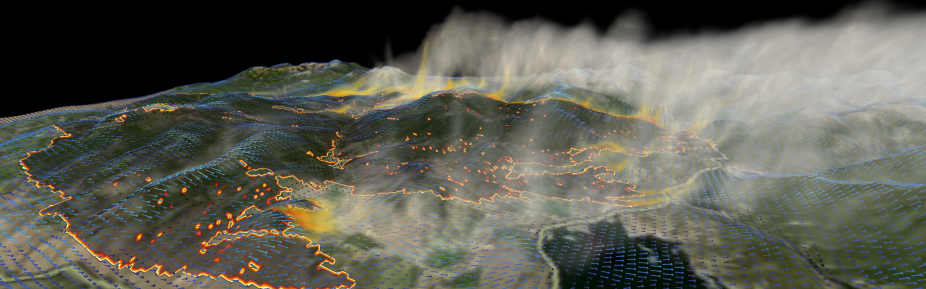
At NSF NCAR, scientists are undertaking wildfire research on a variety of fronts–working on improving models of wildfire behavior, using research aircraft and other tools to explore the air quality impacts of smoke plumes, and much more.
Educator Resources
This short video describes the science questions that researchers asked during a 2018 project called the Western Wildfire Experiments for Cloud Chemistry, Aerosol Absorption, and Nitrogen (WE-CAN). There is also a classroom activity that explores wildfires and air quality using videos and data from the WE-CAN field project.
Leaving it all behind: Evacuation lessons from wildfires in Colorado
This recorded panel is part of the NSF NCAR Explorer Series and shares lessons learned from community evacuation experiences with two Colorado fires: the 2020 East Troublesome Fire and the 2021 Marshall Fire. Recommended age of 12+.
The UCAR Center for Science Education provides teaching resources for K-12 classrooms. Explore the following wildfire resources: