Analytical Instruments: The Tools of the GOTHAAM Trade
We are not talking about musical instruments here, instead intricate machines known as analytical instruments. They have multiple wires, tubes, and computers running them, but their role is simple— these instruments take a sample of air and measure what is in it, from gases to small particles called aerosols. The instruments can also tell us what elements they are made out of, how much of it is there, and where they came from.
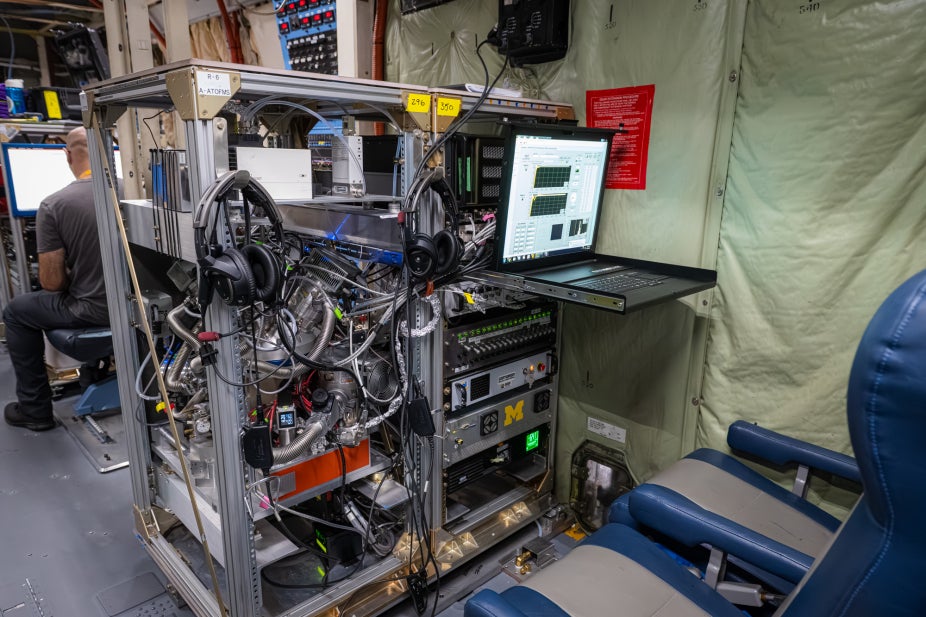
The ATOF-MS instrument rack installed on the NSF NCAR C-130.
Chris Rodgers, CODE10 Photography
The NSF NCAR C-130 aircraft is outfitted with cutting-edge instrumentation months before any flying takes place. Different teams work to test and fit individual instruments onto NSF NCAR C-130 aircraft and troubleshoot instrument issues during the GOTHAAM project. There are days dedicated to fixing issues and fine tuning instruments during the project.
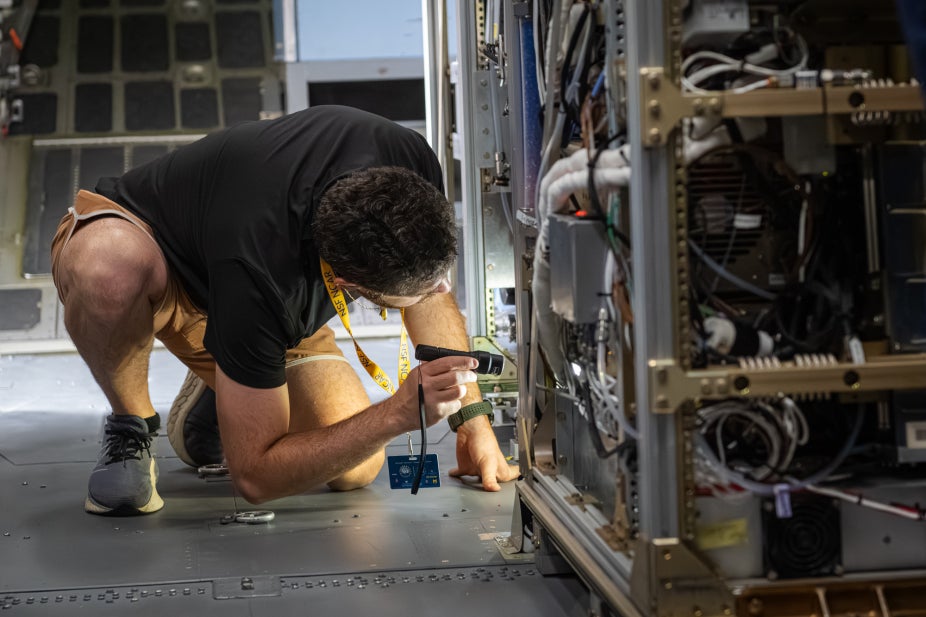
There were days in GOTHAAM dedicated to troubleshooting and inspecting instruments.
Chris Rodgers, CODE10 Photography
While GOTHAAM’s instruments are specialized and can be quite technical, they fall into these types of instruments:
- Mass spectrometers that can identify hundreds of chemical compounds in real time as the airplane flies through the skies of New York.
- Particle analyzers that characterize and identify the sources of aerosols
- Sensors for key oxidants like ozone and hydroxyl radicals.
Just like you might have a tool bag to store different tools, the NSF NCAR C-130 was equipped with different instruments to collect a wide variety of data. The atmosphere and what is in it is complex and a variety of instruments are needed to measure certain sizes and types of particles to get a comprehensive understanding of what is in our atmosphere. The table below shows the instrument names and what it measures, giving us a sense how detailed and comprehensive the measurements are and the robust dataset researchers are using to help understand air pollution.