Quick Questions with GOTHAAM Team Members
Hear answers from GOTHAAM project team members to quick questions about the campaign.
The Greater New York Oxidant Trace Gas Halogen and Aerosol Airborne Mission (GOTHAAM) study aims to better understand the chemistry and sources of air pollution and how different air pollutants react throughout the day and into the night above New York’s metropolitan area.

The New York metropolitan area is the most populous in the U.S with over 20 million residents.
Bruce Emmerling
Based out of Long Island, New York, the airborne portion of the project took place from July 16th to August 31, 2025 where we flew the NSF National Center for Atmospheric Research (NSF NCAR) C-130 aircraft. Funded by the U.S. National Science Foundation (NSF), GOTHAAM is a highly collaborative project, led by scientists from six universities including Stony Brook, University of California, Irvine, University of Wisconsin, Colorado State University, the University of Colorado at Boulder, University of Michigan, and NASA. While we have completed the research flights, we are now hard at work analyzing and interpreting the robust datasets that we collected.
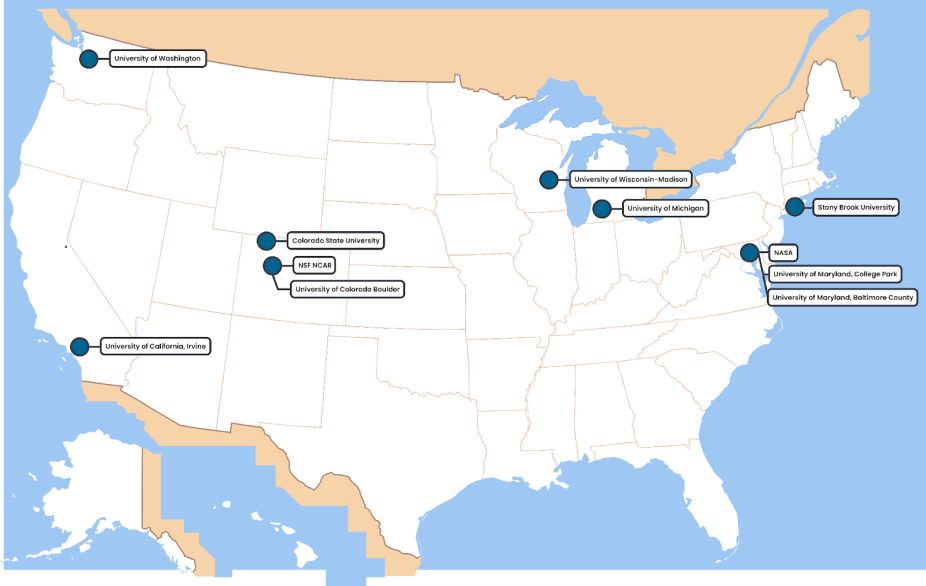
The university and institutions involved in GOTHAAM.
UCAR
The team is composed of experts from all different fields—including scientists, technicians, pilots, mechanics, forecasters, and educators. And we all work together to make a project like this possible, being responsive and flexible to the dynamic conditions in the field.
Take a deep breath–our atmosphere provides us with oxygen and protects us from harmful radiation. However, we can be negatively impacted by air pollution in our atmosphere. Gases and small particles called aerosols in our atmosphere mix, react, and form air pollutants that are harmful to our health and impact the environment around us. Understanding the chemistry of air pollution also has major effects on our behavior, from how we do our daily activities to how much time we spend outdoors.

Outdoor recreation, sports, and even trips to the grocery store can be influenced by air quality.
Edward N. Johnson, Wikimedia Commons
The main objectives of GOTHAAM are to identify and quantify the sources, composition, and transformation of air pollutants above the New York City metropolitan area. What we find out will expand the tools scientists and policymakers can use to tackle air pollution not only in the New York metro area, but globally. Air pollution remains a top concern for our present and future quality of life.
The team is focused on several scientific questions:
- What happens when emissions from New York’s forests and ocean mix with those from the city?
- What chemical processes take place in the atmosphere at night?
- How does nighttime chemistry affect air pollution levels by morning?
The region around New York metro is surrounded by forests and ocean–both environments that contribute to groups of gases and particles that react and form air pollutants. We want to figure out where particles and gases are coming from these environments and how important they are in reacting with the atmosphere above the New York metro area.
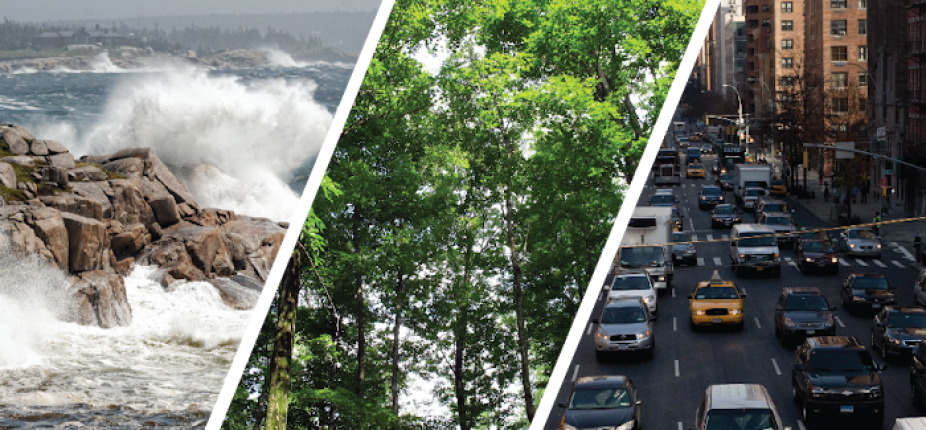
Different environments contribute to air quality.
WikiCommons
During the day, we know chemical reactions in the atmosphere are powered by the sunlight, providing the energy to break chemical bonds. But how does that change when the sun goes down? At night, the atmospheric conditions change, often higher humidity and cooler temperatures, leading to less mixing in the atmosphere. What chemical processes take over and how does that affect the chemical composition–what particles and gases there are?
Not only do we want to know what happens during the night, we want to see if there are gases and particles that may accumulate at night, only to react at the first crack of sunlight. Is there a pulse of activity as the sunrise and what chemical species–aerosols and particles–are involved? These are all questions the GOTHAAM project aims to tackle.
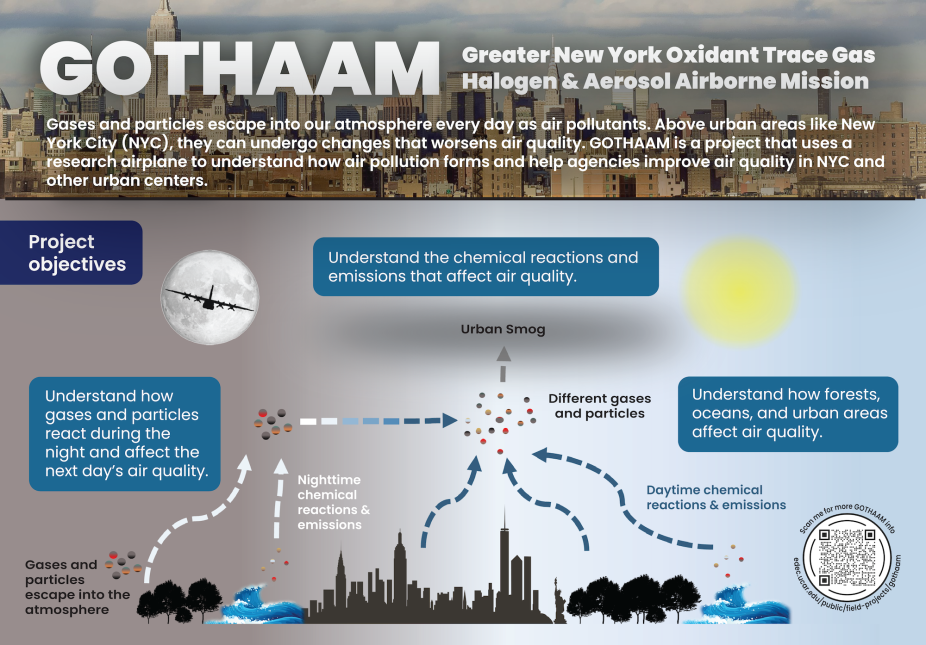
The scientific objectives of GOTHAAM.
UCAR
GOTHAAM used the NSF NCAR C-130 research aircraft, which is essentially a flying laboratory, to conduct 21 research flights over 120 hours of flight time. We flew at about a 300 mile radius of Long Island’s MacArthur Airport during the 16 week project.
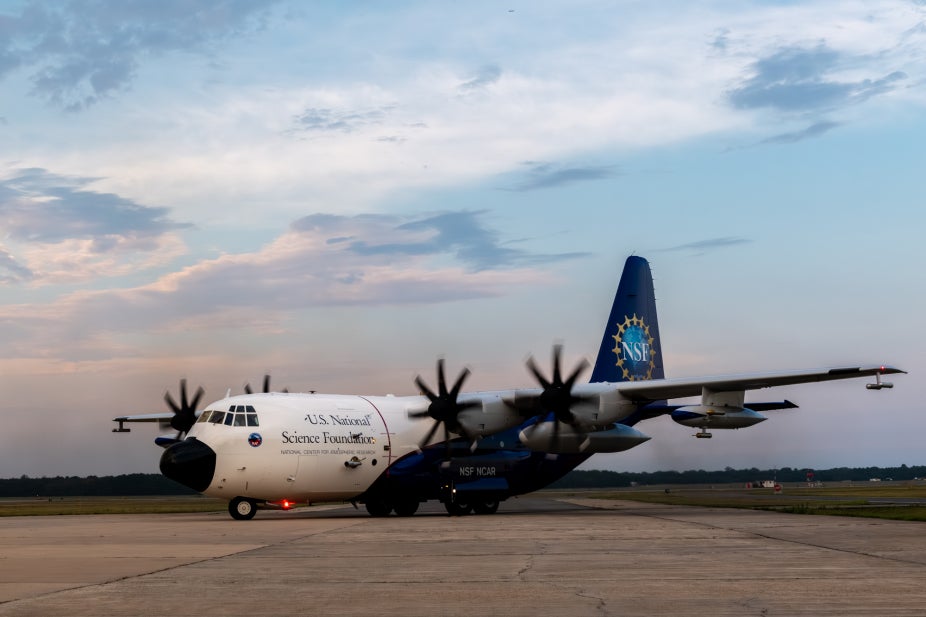
The NSF NCAR C-130 used in the GOTHAAM field project.
Chris Rodgers, Code 10 Photography
The NSF NCAR C-130 is owned by the National Science Foundation and managed and operated by specialized staff in the Earth Observing Laboratory. This includes expertise in aircraft ground operations, maintenance, and communication.
The C-130 originally served as a cargo plane, so it is able to carry a large payload of instruments while also having a range of more than 1500 miles and the ability to fly between 1000 – 15,000 feet in altitude. These aspects are important in order to fully characterize the atmospheric chemistry of the New York City region because research flights can span into different environments to capture the complexities of chemical processes and give us insight on how gases and aerosols form.
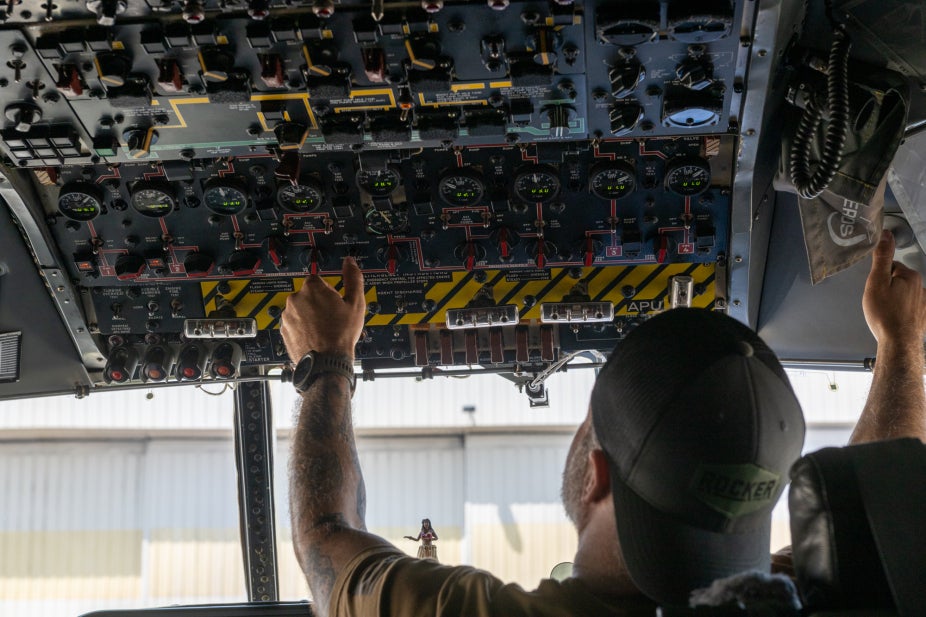
NSF NCAR staff maintain the C-130 to ensure the success of research flights.
Chris Rodgers, Code 10 Photography
There are several unique aspects to the GOTHAAM project!
First is the location and time of year. Most previous aircraft studies have focused on the western U.S. or examined the Northeast in winter, when atmospheric chemistry is less active. When studying the chemistry of air pollutants, summer is far more chemically active compared to other seasons. Warmer temperatures and more sunlight lead to larger urban concentrations of atmospheric pollutants like ozone. There are also more VOC emissions from both human and natural sources and larger oxidant concentrations during summer. GOTHAAM is one of the first campaigns to fully capture the summertime complexity across the full day-night cycle.
Flight plans are critical to capture the different environments that are responsible for the chemistry of the air. Before each research flight, we have team meetings to decide what our objectives are for that specific research flight. We also rely on our forecasters to help us understand where the most scientifically interesting areas to fly.
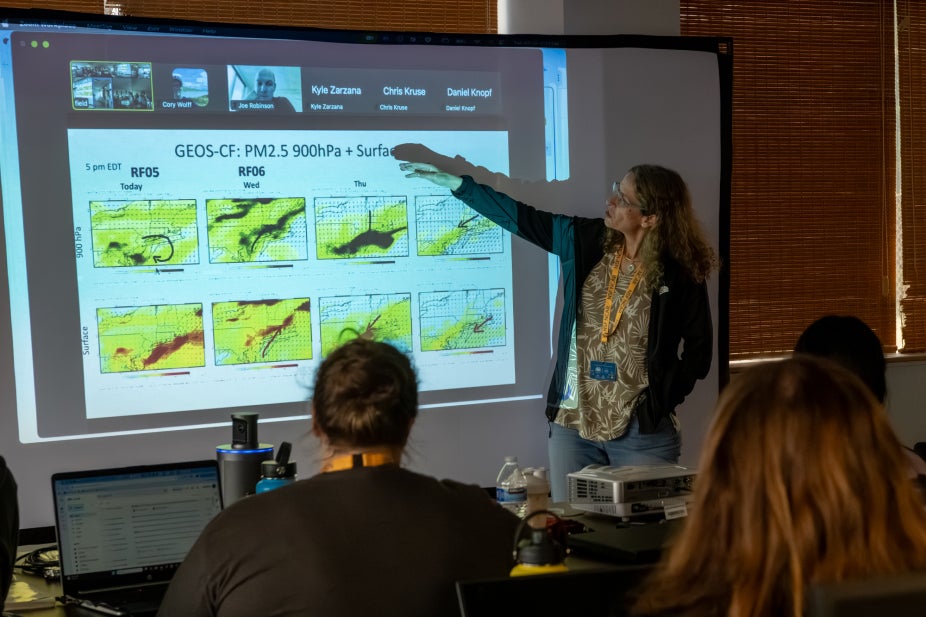
Understanding the present and predicted future atmospheric conditions helps the GOTHAAM team plan for each research flight.
Chris Rodgers, Code 10 Photography
While in-flight, we have mission scientists that communicate with NSF NCAR pilots to make adjustments to the flight plan.
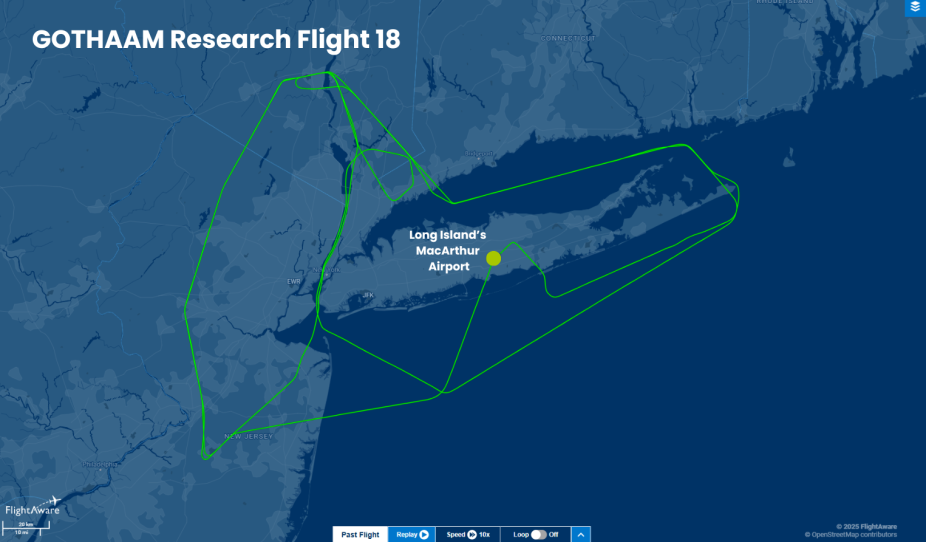
Flight maps of each research flight and the scientific objective is available on the NSF NCAR EOL catalog website.
FlightAware
We will use the data from GOTHAAM to improve air quality models, which are simulations of the physical and chemical processes that affect air pollutants as they disperse and react in the atmosphere. Along with air quality models, our improved understanding of processes in the atmosphere will hopefully empower communities and policymakers to address air quality issues around the world.