Keeping space safe: Understanding the impacts of space weather on satellite orbits
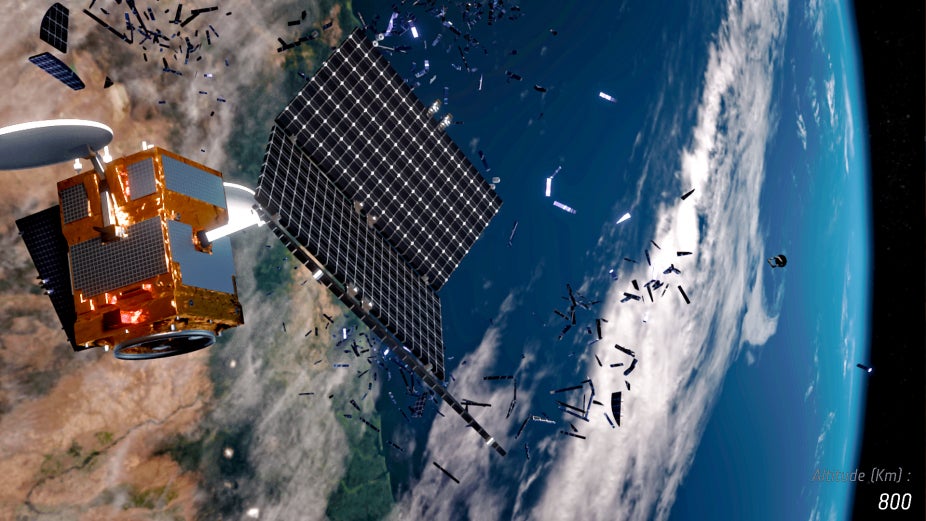
European Space Agency via Wikimedia Commons
7:00 – 8:30 pm MDT
Space may seem incredibly vast, but it is becoming crowded with satellites and other “space junk.” With objects traveling at incredibly high speeds, upwards of 15,000 mph, a satellite crashing into even the smallest of objects can be catastrophic. To prevent collisions between objects, we need to predict the weather in space, just like we predict the weather on Earth.
In this Explorer Series lecture, Nick Pedatella will describe how conditions in space impact satellites and space debris, and the need to understand the space environment to prevent catastrophic collisions between satellites. He will also explain how researchers at NSF NCAR are working to better manage the traffic in this increasingly crowded region.
Nick Pedatella
Dr. Nicholas Pedatella is a scientist in the High Altitude Observatory (HAO) at NSF NCAR. He received his PhD from the University of Colorado in 2011, and was an Advanced Study program Postdoctoral Fellow in the HAO from 2011 to 2013. He then joined the UCAR COSMIC Program Office where he developed techniques for remote sensing Earth’s upper atmosphere using GNSS signals before returning to HAO in 2016. His primary research interest is the variability and predictability of the mesosphere, thermosphere, and ionosphere, with a particular focus on the coupling of these regions with terrestrial weather. He has experience in the development and application of whole atmosphere general circulation models and data assimilation systems, as well as ground and space-based Global Navigation Satellite System (GNSS) observations.