Follow us into the field and explore how we collect data about our Earth.
In collaboration with NSF NCAR’s Earth Observing Laboratory (EOL), EdEC supports field projects across the university community to measure, assess, and study Earth system patterns and interactions across continents and oceans. EdEC partners with these experts to lead educational activities ranging from aircraft open houses to classroom visits, ensuring the public can engage with science in locally relevant ways.
Viewers interested in understanding how scientists, engineers, air crew, project leaders, educators, and students operate in unfamiliar locations can get an inside look at the dynamic process of conducting research in the field with the videos below.
EdEC-Supported Field Projects
Browse field project videos to get an inside look at what it's like to be in the field.
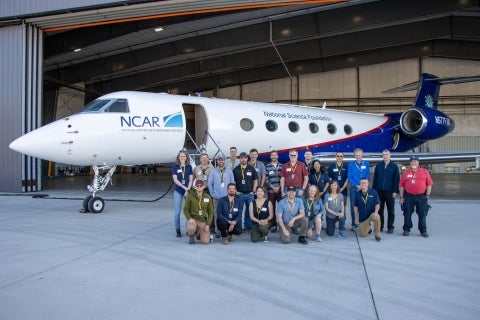
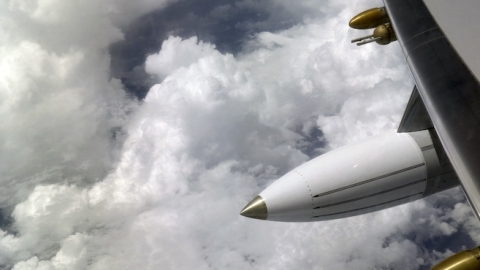
The Convective Gravity Waves in the Stratosphere (CGWaveS) project studied gravity waves created by convection in the atmosphere across the central plains of the United States.
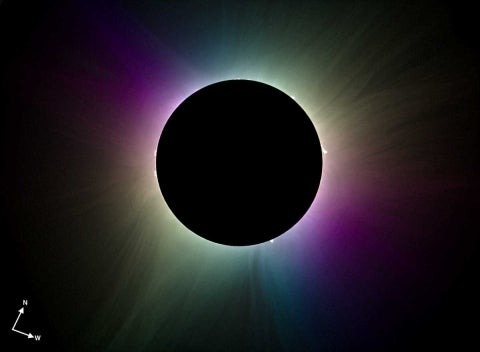
The CATE 2024 mission brought community and professional scientists together in partnership during the 2024 total solar eclipse to gathered data on the corona, our Sun's outermost atmosphere.
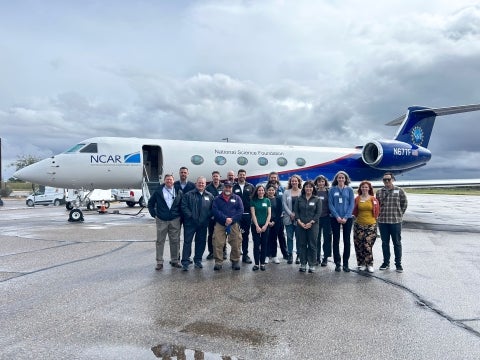
The Airborne Coronal Emission Surveyor (ACES) project studied the Sun's corona during the 2024 total solar eclipse. EdEC assisted with public events, including an open house, classroom visits, and a planetarium lecture.
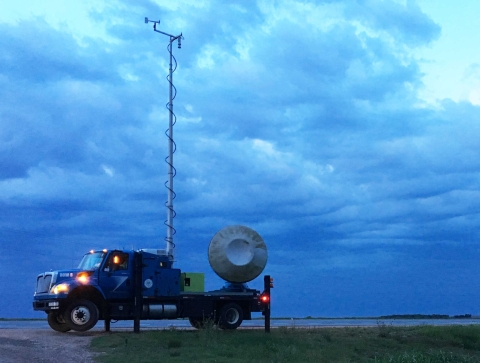
RELÁMPAGO, Remote Sensing of Electrification, Lightning, and Mesoscale/Microscale Processes with Adaptive Ground Observations, investigates different phases of the life cycle of thunderstorms that occur in Argentina.
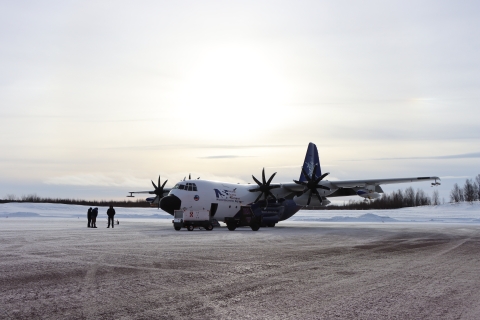
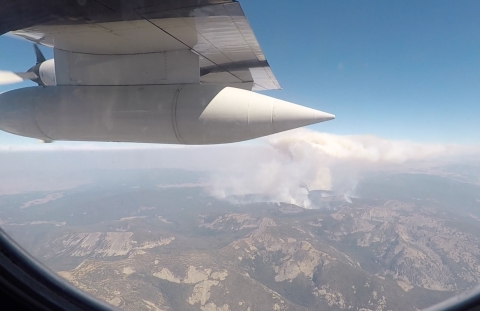
WE-CAN, Western Wildfire Experiment for Cloud Chemistry, Aerosol Absorption and Nitrogen, investigates how chemistry in western wildfire smoke affects air quality, nutrient cycles, weather, and climate.